THE ENTERPRISE ARCHITECTURE WORLD SERIES · BOOK ONE
“The first question is always the same.
What is this building actually for?
Everything else follows from whether
you are willing to hear the answer.”
— R. Mercer, working notebook
Both Paperback and Kindle edition available now
ABOUT THE BOOK
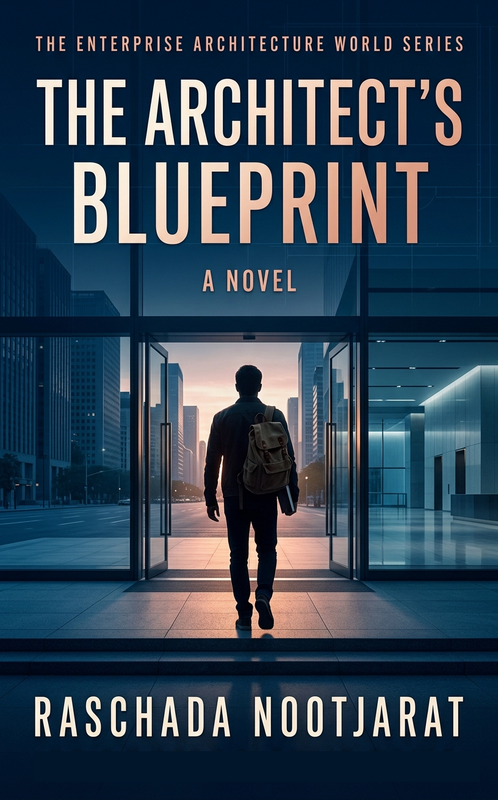
The Architect’s Blueprint is a novel about organizations as built things — with load-bearing walls, structural dependencies, and the persistent gap between a capability that is present and a capability that is structurally deployed.
A note on the architecture
Readers will recognize the tensions the novel explores: the gap between architecture as documentation and architecture as organizational thinking; the difference between a capability that exists and a capability that is structurally deployed; and the question that sits beneath every engagement, regardless of methodology:
Do the people building this believe it is worth building?
The organizations, characters, and engagements in this novel are fictional. The architectural principles are not.
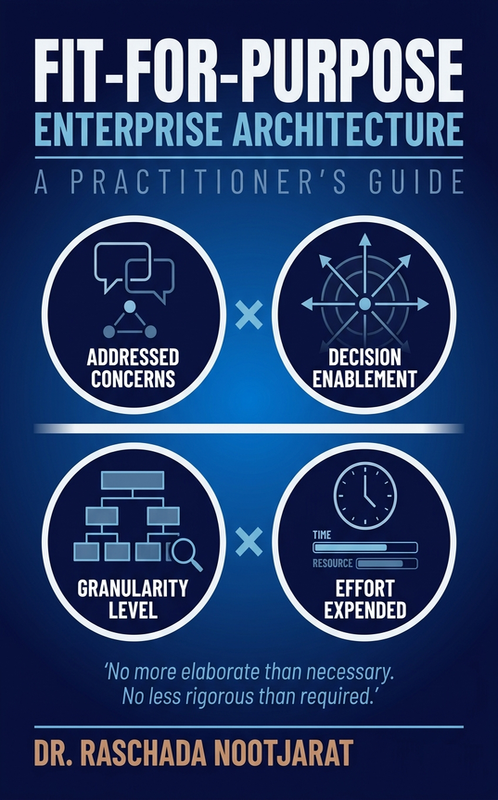
Readers who want the framework behind the story will find it in Fit-for-Purpose Enterprise Architecture, the author’s companion practitioner’s guide.
— R.N., Bangkok, 2026
THE STORY
The Phoenix is the product of a merger between two technology firms — The Eagle and The Crane. One year in, it is neither. The load-bearing walls have not been mapped. The culture has not converged. The most important client engagement in the company's history is four weeks away.
Ryan Mercer arrives on a Monday morning with a canvas backpack and a leather notebook. He has done this kind of work for nineteen years: arriving at organizations that are not quite functioning as they intend to function, finding the gap between intention and reality, and building something honest in the space between them.
Ryan's 90-day frame is not a project plan. It is a discipline — a structured method for reading an organization honestly before proposing anything about it.
“A broken coffee machine on the main floor is, in organizational terms, a piece of information. An organization in which a broken machine has been present long enough that nobody thinks to date the note anymore is an organization in which someone is waiting for someone else to take ownership.”
Chapter 3 — The Man With a Notebook
“We name the risk.
We write it clearly.
Then we build from truth.”
The Phoenix whiteboard — Chapter 19
The building has people in it who know what it is for. That is the architecture that holds after the architect leaves. That is the only architecture worth building.
Ryan Mercer’s notebook — Day 90
Who this book is for
If you have spent time inside organizations as an architect, a consultant, or a technology leader, you will recognize the gaps Ryan reads in the lobby of The Phoenix. The novel gives narrative form to the decisions that frameworks describe in abstract — and to the human cost of getting them wrong.
No prior knowledge of enterprise architecture is required. The Architect's Blueprint is, at its core, a novel about what it costs to build something that lasts — and about the people who are willing to ask the honest question before they draw anything.
The companion book
Readers who want the framework behind the story will find it here. The Fit·for·Purpose concept is the practitioner guide to the architectural philosophy that Ryan applies across ninety days inside The Phoenix — concern-driven, right-sized, and grounded in the honest reading of organizational context.
About the author
Enterprise Architect · Author · Practitioner
Dr. Raschada Nootjarat is a TOGAF® certified Enterprise Architect and senior technology executive with more than twenty-five years of experience architecting digital transformation across global organizations.
She holds a PhD in Information Technology in Business from Chulalongkorn Business School and teaches as an adjunct lecturer at Chulalongkorn University. The Architect’s Blueprint is her debut novel.
She lives and works in Bangkok, Thailand.